Published by Dating Online
A suspicious profile is a pattern, not a single clue
A potentially fake profile presents identity details, photos, or personal claims that conflict with one another or with the person's messages. The useful question is whether several independently observable details point in the same direction: a location that changes, a photo set that appears unrelated, and answers that contradict the biography carry more weight together than any one item alone.
A sparse profile, highly polished photo, older image, frequent travel, or reluctance to verify outside the app has an innocent explanation in some cases. That uncertainty does not require continued contact. Once the record contains enough inconsistency to undermine trust, withholding your phone number, workplace details, family information, and social accounts is a proportionate first step.
Compare photos, biography details, and stated routines
- A polished photo, a sparse biography, or one unusually professional-looking image is not enough to label an account fake. Older photos, frequent travel, and brief profiles all have non-deceptive explanations.
- A stronger record names a direct conflict: the profile says the person lives in one city, while captions, stated routines, or later messages place them elsewhere without a coherent explanation.
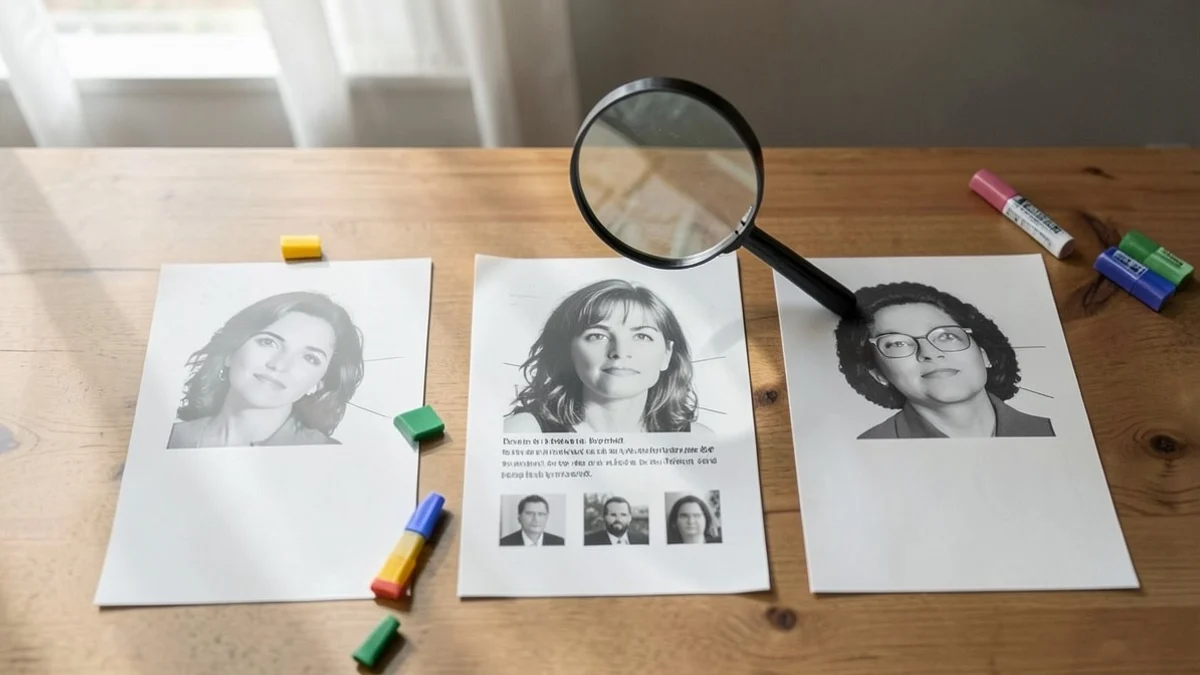
- Photo sets deserve comparison with the written profile. Images that appear to show different ages, climates, lifestyles, or locations are worth noting when the biography presents a single, conflicting account of the person’s life.
- Generic biography text becomes more relevant when it clashes with claimed specifics. For example, a profile describing a long-established local routine but unable to give consistent basic details about that routine creates a reportable mismatch when paired with other conflicts.
- Screenshots should preserve the profile name or username, photos, biography, relevant messages, and the date viewed. A concise report can state the facts: “Profile lists Chicago; messages on [date] gave two different home locations; image set appears inconsistent with stated age and timeline.”
- A cluster of documented conflicts supports pausing personal disclosures and ending contact. The app’s in-product report flow is the appropriate next step; no identity documents, off-app investigation, or confrontation is needed.
Treat chat inconsistencies as evidence to weigh
Messages add useful evidence when they contradict the profile or earlier replies. Examples include a claimed home city changing, a work schedule that conflicts with the stated routine, repeated replies that ignore a simple profile-specific question, or language that appears copied across unrelated topics. Save the relevant messages with their dates rather than relying on memory.
One delayed, awkward, or vague reply has many possible explanations, including privacy preferences, busyness, or communication differences. Repeated evasion combined with conflicting personal details is a stronger basis for ending the exchange. A person does not have to prove an identity to earn your continued attention; an interaction that feels coercive, evasive, or too inconsistent for trust can end without further debate.
Using search checks without turning them into a verdict
A reverse-image search can surface earlier public uses of a photo, matching images, or pages where the image appears with a different name. A text search can also reveal repeated biography wording. The Federal Trade Commission includes reverse-image searching a profile photo among its advice for suspected online dating scams.
Search tools have hard limits: they can miss copied images, return false matches, or connect the image to an unrelated person. A legitimate user may have posted an older photo elsewhere, and a search result rarely proves who controls the dating account. Treat the result as a lead to compare with the profile and chat, not as an identity verdict.
No search result justifies demanding identity documents, collecting sensitive records, contacting a supposed employer or relative, or investigating the person offline. The safe boundary is limited, public-information checking followed by a platform decision based on the account's own inconsistencies.
Saving only the details needed for a useful report
- Profile screenshots should show the photos, biography claims, displayed location, username, profile URL or other account identifier, and the date captured.
- Conversation screenshots should preserve the messages that conflict with the profile, such as different locations, work details, relationship claims, or repeated evasions, with enough surrounding context to show who said what.
- A short evidence note should state the exact mismatch and when it occurred—for example, “Profile says Chicago; messages on September 9 say the person lives in Miami”—rather than labeling the account fake as a conclusion.
- If an image or text search returns a possible match, save the result and search date as a lead alongside the in-app evidence; search tools can miss copied images, produce false matches, or identify an unrelated person.
- Capture this record before unmatching when the service permits it. If the profile disappears, retain the screenshots and submit the saved account details through the app’s support or impersonation channel, if available.
Block, report, or pause contact based on the record
Several concrete inconsistencies provide a sufficient reason to stop replying, block the account, and submit an in-app report. Before unmatching, capture the relevant evidence if the service permits it. In the report, describe what the profile claimed, what the account later said, when the conflict occurred, and what image or text reuse you observed.
The app's report menu is the primary path. Its current help center or account-safety documentation should identify the available category, blocking process, and any evidence rules. When a real person's name or images appear to have been copied, the service's support or impersonation channel is the more specific route.
While the situation remains unclear, personal contact details, workplace information, family details, and linked social accounts stay private. If the exchange becomes coercive, evasive, or inconsistent enough to damage trust, the contact cutoff is complete: stop replying, block the account, report the observed mismatch, and retain a short factual record of what was submitted.
Sources for this guide
- What To Know About Romance Scams — Federal Trade Commission
- Romance Scams — Federal Bureau of Investigation