
Published by Dating Online
A long partnership can make individual preferences quieter
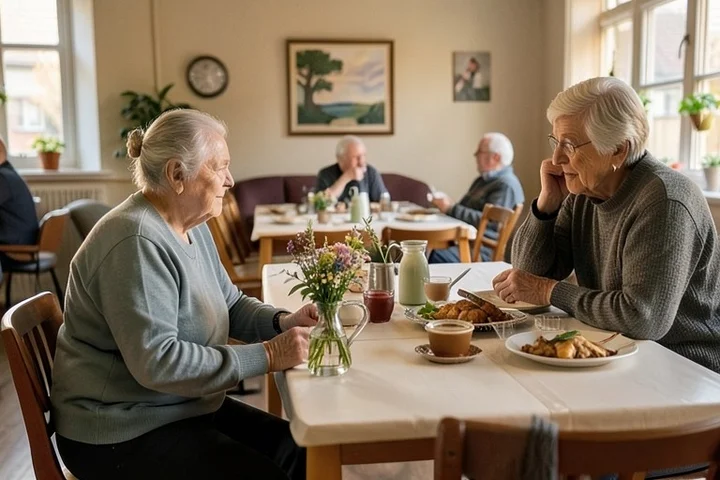
A long marriage often turns individual choices into shared arrangements. Weekend plans, meals, social events, travel, texting habits, and even the amount of quiet in a home may have been negotiated so routinely that the boundary between personal preference and the pair's needs becomes difficult to recall. The relationship also supplied a social role—spouse, host, decision-maker, caregiver, or familiar companion—that made your identity feel settled from the outside. When that structure changes, ordinary dating questions reach deeper than they appear: dating brings your enjoyment with another person and your need for private interests into view.
This is why rebuilding individual preferences matters before treating a promising connection as a replacement relationship. Attraction can coexist with uncertainty about frequent contact, spontaneous plans, physical affection, long conversations, or a highly independent routine. Those preferences often emerge through experience rather than prior analysis; a brief meeting, a new conversation, or an invitation that you accept or decline gives you something concrete to examine. The result is useful uncertainty: instead of presenting a finished version of yourself, you can notice what feels natural, what feels imposed, and what deserves another try.
The same process applies to dating-app conversations. You do not have to decide your entire relationship philosophy before replying to someone, but you can pay attention to the choices in front of you: whether you want to move from messages to a meeting, how much personal history you want to share, and whether the conversation leaves room for your own voice. Dating becomes less about proving that you are ready and more about making individual preferences visible again.
Why every new person can feel like a comparison?
A former spouse remains an unavoidable reference point after many years together, even when resemblance is not your aim. Familiar habits become an internal measuring stick: the way someone tells a story, responds to a message, chooses a restaurant, handles disagreement, or shows affection may immediately bring the former relationship to mind. Sometimes the comparison identifies a genuine present preference, such as wanting more warmth or more reliable communication. Sometimes it records unfamiliarity, while the former spouse's behavior was known through years of accumulated context.
Separating familiarity from compatibility requires examining what the comparison reveals. Suppose a new date is quieter than your former spouse. The relevant assessment concerns the actual conversation, your ability to participate, and your interest in learning more about how that person communicates. Repeatedly leaving feeling dismissed, pressured, or unable to speak freely points to the interaction itself rather than to reflexive longing for what was familiar.
Pressure to decide quickly makes this comparison louder. Treating every date as a test of lifelong partnership gives small differences too much meaning and turns the former marriage into a hidden standard. A lower-pressure frame lets memory remain information without becoming a verdict: a person may remind you of your former spouse, while the assessment remains focused on the person in front of you.
Use early dates to collect information, not force certainty
A low-pressure date works best with a modest purpose. A short coffee, walk, or similarly simple meeting gives two people enough time to notice conversation and comfort without requiring either person to perform a complete relationship assessment. The meeting creates a manageable setting in which present preferences become easier to hear; it neither manufactures chemistry nor settles the connection's future. Limited scope also makes it easier to leave with clarity rather than obligation.
During and after the meeting, notice specific reactions instead of reaching immediately for a label. Did you want the conversation to continue, or were you relieved when it ended? Did the pace feel mutual? Were you curious about the other person's life, or mainly occupied with comparing them with your former spouse? Did a question invite you to share, or did it push you into more disclosure than you wanted? These details provide better evidence than a broad judgment such as “dating is not for me” or “this must be the right person.”
Repeated experiences reveal preferences that were previously hidden inside the marriage. You may discover a liking for planned dates without constant messaging, affection that develops gradually, or shared activities that leave room for separate interests. A quality you assumed was essential may turn out to be tied to familiarity with your former spouse. Reflection after each meeting distinguishes a preference worth honoring from a fear response worth observing before a larger decision.
Unfamiliar does not always mean wrong
Re-entering dating can feel awkward because the conventions are new to you, independent of the particular connection's suitability. Messaging before meeting, deciding how often to communicate, receiving compliments from a stranger, or ending a date without a settled plan all feel less predictable than married life. With a respectful person and continuing curiosity, that discomfort reflects learning a different social rhythm. It need not become enthusiasm, and it does not establish incompatibility.
A real mismatch becomes clearer in the content of the interaction. Conflicting priorities, repeatedly one-sided conversation, absent attraction, or a pace that does not suit you all point to poor fit. A boundary concern involves pressure to disclose private information, disregard for a stated limit, contempt, manipulation, or unwanted persistence. Such conduct requires no adjustment from you. Post-marriage uncertainty never requires continuing an interaction that feels disrespectful.
This distinction protects both curiosity and judgment. Give yourself room to learn a new dating rhythm when the other person is considerate, while allowing a clear no when the problem is the person's behavior or the basic fit between your lives. The result is not a rule to tolerate discomfort; it is a way to identify what the discomfort is attached to.
Do not offer more intimacy than you can support?
After a long marriage, a new person may ask for emotional access before you know what level of closeness you can comfortably sustain. Early intensity can feel flattering or reassuring, especially when certainty seems preferable to the ambiguity of dating, but agreeing to more contact or disclosure than you want can make self-knowledge harder to recover. You may begin managing the other person's expectations instead of noticing your own. Pace is therefore not a sign of weak interest; it is a condition that lets interest be assessed accurately.
Boundaries can be specific without becoming a speech about your entire past. You might share the parts of your history that provide relevant context while keeping painful or private details for a later point, if trust develops. You can say, “I would rather take time before discussing that,” or, “I enjoy talking with you, but I do not want to message constantly.” If someone asks for a relationship label before you have enough experience to choose one, a direct response such as “I am interested in continuing, and I am not ready to define this yet” keeps the connection honest.
These limits also apply to your own impulses. Avoid promising exclusivity, reorganizing your routine, or treating frequent contact as evidence of compatibility simply because the attention feels welcome. Let a new person earn deeper access through consistent, respectful interaction, and let your willingness to offer that access develop at its own pace. Slowing down whenever emotional access exceeds what you can comfortably support prevents an early connection from becoming another arrangement you maintain out of obligation.
The useful goal is clearer self-knowledge
The most useful result of an early date may be a clearer answer about yourself rather than a decision about the other person. Afterward, write down what you enjoyed, what felt uncomfortable, what you wanted more or less of, and what may have been a comparison with your former spouse. Concrete observations such as “I liked having a planned time,” “I wanted more reciprocal questions,” or “I felt rushed when the conversation turned intensely personal” provide material for the next date. Over several meetings, the difference between a stable preference and a one-time reaction becomes easier to see.
That reflection changes the consequence of uncertainty. Instead of measuring whether you can replace the marriage, you assess whether the interaction fits the person you are becoming outside it. Curiosity and comfort support another meeting; poor fit supports declining; a need for more room supports pausing. Treat early dating as a series of small preference discoveries, and slow down whenever emotional access exceeds what you can comfortably offer.